

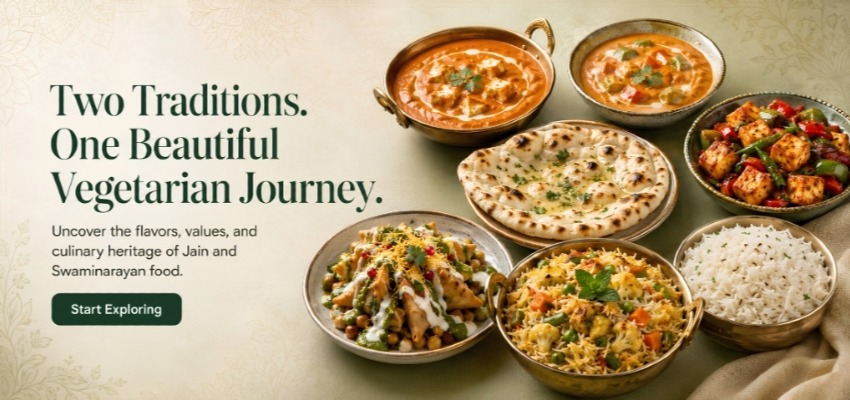
Now, even though Jain and Swaminarayan cuisines both start from vegetarian roots, they still follow their own spiritual rules and food guidelines. For many families and groups, it’s normal that different members follow different traditions, so it can be hard to locate a restaurant where everybody can eat together. That’s where places that carefully prepare both Jain and Swaminarayan-friendly dishes start to feel important to the community.
The Values Behind Swaminarayan and Jain Cuisine
Food is more than just nourishment in both Jainism and the Swaminarayan tradition it feels like faith, compassion, and quiet mindfulness all mixed. Every ingredient, and every meal, is handled with intention, so the whole routine sort of leaks beyond the dining area and into daily habits in a steadier way.
The Jain religion food is guided by Ahimsa, or non-violence toward all living beings. This way of thinking pushes followers to make choices that reduce harm, so cuisine contains strictly Jain vegetarian food and traditionally is not an onion garlic food, it even does not contain potatoes, carrots, and radishes. But it’s not only about what gets eaten. It’s also about how those choices show compassion, respect for life, and a spiritual discipline that stays consistent.
Swaminarayan food, meanwhile, leans into Satvik food, a style of eating aimed at purity, steadiness, and devotion. Meals are prepared using fresh, wholesome vegetarian ingredients, and they generally avoid onion and garlic since those are viewed as out of place for a Satvik lifestyle. The goal is to make dishes that are simple yet still tasty, so they support the body, but also the practice of prayer and inner focus.
Even though the two traditions come from different religious foundations, and they set dietary rules in their own ways, they also overlap in several key values. Both promote vegetarian living, mindful eating, and the use of fresh ingredients prepared with care. Their shared interest in purity and kindness has made Swaminarayan and Jain cuisine well known not only for devotees, but also for diners who want wholesome Indian meals that are no-onion, no-garlic, and generally easy on the mind too.
When you see both the similarities and the differences, diners can better appreciate the cultural roots behind each tradition, and then make choices that feel informed, rather than rushed.
How Are Jain and Swaminarayan Meals Different?
Let us understand how Jain and Swaminarayan meals are different from the table presented below:
| Aspect | Jain Food | Swaminarayan Food |
| Religious Tradition | Rooted in Jainism and guided by the principle of Ahimsa (non-violence toward all living beings) | Rooted in the Swaminarayan tradition of Hinduism, emphasizing satvik (pure) living and devotion |
| Primary Philosophy | Minimize harm to all forms of life through mindful food choices. | Support spiritual discipline and purity through a simple, wholesome vegetarian diet |
| Vegetarian | Yes, strictly the Jain vegetarian food. | Yes, strictly vegetarian |
| Onion & Garlic | Avoided because they are root vegetables and are not part of traditional Jain dietary practices. | Generally avoided as they are considered rajasic and tamasic in satvik cooking. |
| Dairy | Commonly included, such as milk, paneer, yogurt, butter, and ghee | Commonly included as part of a vegetarian satvik diet. |
| Focus of the Diet | Compassion, non-violence, and minimizing harm to living beings. | Purity, devotion, self-discipline, and mindful eating |
| Common Dishes | Jain curries, chaat, paneer dishes, biryani, lentils, rice, and breads prepared without onion, garlic, or root vegetables. | Satvik curries, paneer dishes, rice preparations, Indian breads, snacks, and other vegetarian meals prepared according to Swaminarayan dietary practices |
| Ideal For | Followers of Jainism and anyone looking for no-onion, no-garlic vegetarian meals that avoid root vegetables. | Followers of the Swaminarayan tradition and those who prefer satvik, pure vegetarian food. |
What Can You Eat on a Jain or Swaminarayan Diet?
One of the biggest misconceptions about Jain and Swaminarayan food is that the diet guidelines leave, with very few options to just enjoy. In reality, both traditions celebrate a wide variety of fresh flavorful vegetarian ingredients, that can be turned into satisfying everyday meals and festive dishes as well. Even though the two diets follow different religious principles, they share a shared respect for wholesome, thoughtfully prepared food.
Jain Friendly Ingredients
Jain cuisine is built on fresh seasonal ingredients while observing the principles of Ahimsa, or non-violence. Meals typically include grains, legumes, dairy products, fruits and above ground vegetables, carefully prepared without root vegetables, so it stays aligned with that idea.
Common Jain-friendly ingredients include:
- Paneer and other dairy products
- Tomatoes
- Bell peppers
- Pumpkin
- Bottle gourd (Lauki)
- Ridge gourd (Turai)
- Spinach and leafy greens
- Cabbage and cauliflower
- Green peas
- Lentils and beans
- Rice, wheat, millet, and other grains
- Yogurt, butter, and ghee
- Fresh herbs and aromatic Indian spices
These ingredients come together to make everything from cozy curries and biryanis to chaats, soups and freshly baked breads, all the while staying true to Jain dietary practices.
Swaminarayan-Friendly Ingredients
Swaminarayan food takes a Satvik approach, which is all about purity freshness and balance. Meals are made with wholesome vegetarian ingredients and in general they skip onion and garlic allowing the natural flavors of vegetables, grains, dairy and spices to stand out.
Common Swaminarayan-friendly ingredients include:
- Paneer
- Fresh seasonal vegetables
- Tomatoes
- Leafy greens
- Lentils and pulses
- Rice and whole grains
- Yogurt, milk, butter, and ghee
- Fresh herbs
- Mild, aromatic spices
- Homemade breads such as naan and kulcha (prepared according to dietary guidelines)
The focus is on simple, nourishing meals that help a balanced lifestyle stay on track, while still being rich in real Indian flavors.
Even if you’re following Jain dietary traditions or a Swaminarayan friendly routine, both cuisines show that vegetarian Jain food can be varied, deeply satisfying, and full of taste.
Why do these traditions steer away from certain ingredients?
Although Jain and Swaminarayan cuisines overlap in quite a few places, the driving reasons behind their food rules come from different spiritual beliefs. When you understand those traditions, diners can actually appreciate not only what is served, but also the ideals that inspired each meal.
Jain dietary practices
For followers of Jainism, daily food decisions are shaped by Ahimsa, the idea of causing the least possible harm to all living beings. This view also reaches the ingredients chosen for everyday cooking.
Root vegetables
Traditional Jain dietary practices typically avoid underground vegetables, like potatoes, onions, garlic, carrots, radishes, beets, and sweet potatoes. When these are harvested, the whole plant is removed from the ground, and it may disturb microorganisms and other types of life. That conflicts with the whole goal of minimizing harm.
Onion and garlic
Because onions and garlic are considered root vegetables, they are left out in Jain cuisine too. Instead, cooks often depend on fresh tomatoes, herbs, whole spices, and careful cooking methods, to create deep, satisfying flavor without using those ingredients.
Swaminarayan Dietary Practices
In the Swaminarayan tradition, how people eat is tied to Satvik living; it leans toward purity, simplicity, and that quiet mindfulness you carry in daily life.
Onion and garlic
These two show up a lot in general Indian cooking, but in Swaminarayan meals they’re typically skipped. The idea is that onion and garlic are considered rajasic and tamasic, at least according to older Indian philosophical views. So instead of those, meals are usually made with fresh vegetables, dairy, grains, herbs, and a carefully balanced set of spices.
Satvik Preparation
But it’s not only about what goes in. Satvik cooking also puts weight on freshness, cleanliness, and mindful preparation. Simple cooking methods, plus high-quality ingredients, help create food that feels nourishing and spiritually meaningful, not just “filling”.
Devotional Principles
Food here is an expression of gratitude and devotion. Preparing meals with care, and sharing them with respect, reflects discipline compassion, and regard for others. In that way, eating becomes part of spiritual practice that does not separate from family life.
Even if the dietary guidelines are different in the details, both Jain and Swaminarayan traditions still encourage mindful eating, vegetarian living, and a deep respect for how food supports physical wellbeing as spiritual values.
Flavor Without Compromise
One of the common myths, especially online, is that Jain and Swaminarayan meals without onion and garlic are somehow bland or weak. Both traditions use fresh ingredients and well tested cooking techniques to build flavor that still feels rich and satisfying.
Tomatoes, fresh herbs, whole spices, dairy, seasonal vegetables, and slow cooking techniques add these layers of flavor and aroma. Instead of always leaning onion and garlic, these cuisines sometimes let the natural taste of each ingredient just take the lead, so the result feels wholesome and genuinely enjoyable, not forced.
Bringing both traditions to one table
Finding a restaurant that can handle both Jain and Swaminarayan-friendly meals isn’t always that easy. At Table Indian Restaurant, the menu is curated in a thoughtful way, so families and groups with different dietary traditions can share authentic Indian cuisine together without stress. Whether you’re craving classic street food, hearty curries, or comforting rice plates, there’s something for everyone, while still respecting individual dietary preferences.
Popular Jain Favorites
Guests looking for Jain-friendly options can enjoy a variety of dishes, including:
- Kachori Chaat
- Bhalla Papdi Chaat
- Mango Bhel
- Tomato Shorba
- Paneer Makhani
- Veg Makhani
- Veg Biryani
- Chilli Paneer
- Butter Naan
Swaminarayan-Friendly Choices
Many signature dishes are also available in Swaminarayan-friendly preparations, keeping the same authentic flavors while following Satvik dietary principles, so it still feels right at the table. Some popular choices include, though it can vary depending on who’s cooking, things like the usual comfort foods prepared in a purer.
- Kachori Chaat
- Tandoori Paneer Tikka
- Tandoori Chaap
- Paneer Taka Tak
- Veg Tikka Masala
- Veg Biryani
- Jeera Rice Bowls
- Soya Chaap Burger
Choosing a Restaurant That Understands Both Traditions
When you dine out, it helps a lot to pick a restaurant that understands the dietary ways of both Jain and Swaminarayan traditions. Try to find a menu with real variety, and make sure they use fresh, clean ingredients. Dishes should be prepared with care, and also keep in mind the specific food preferences, otherwise the whole experience feels off. You can enjoy authentic Indian flavors both Swaminarayan and Jain food near me without cutting corners, so that everyone at the table can have a satisfying meal.
At Table Modern Indian Restaurant, guests can check out separate Jain and Swaminarayan menu options, so families and friends with different food traditions can sit together and enjoy dining without stress.